

Skip to content
  • Contact Us
Corporate Class Inc Logo
  • COACHING
  • WORKSHOPS
    • Executive Presence and Leadership Skills
    • Diversity & Inclusion
    • Women in Leadership Masterclass: Power Up Your Presence
    • Empowered Mindset for Leaders
    • The Five Behaviors of a Cohesive Team
    • Board Presence for Senior Management
    • Presentation Skills
    • Personal Branding
    • Discover Your Unique Value Proposition
    • Mental Fitness by Positive Intelligence
    • Corporate Well-Being Training for Leaders and Teams
    • Lunch & Learns
  • CERTIFICATIONS
    • ICF Certified Executive Presence and Leadership Skills
    • Personality Assessment – Master Level Certification Prerequisite
    • Personality Assessment – Master Level Certification
  • ASSESSMENTS
    • Personality & Behavior Assessment
    • Fascination Advantage® Assessment
    • Presentation Skills Analysis: FIGARO
    • EQ-i 2.0 Assessment
    • Korn Ferry Leadership Architect Tool™
    • EQ 360 Assessment
    • DiSC Assessment
    • Hogan Assessments
  • DIVERSITY & INCLUSION
  • RESOURCES
    • Blog
    • Books
    • Podcasts
    • Presentation Skills Quiz
    • Closing the Virtual Teamwork Skills Gap
    • The 7 Business Benefits Whitepaper
    • Cost of Hiring and Developing People
    • Videos
    • Join Our Mailing List
    • FAQ
  • ABOUT US
    • Our Approach
    • Our Company
    • Our Team
    • Our Clients
    • Testimonials
    • In the News
  • COACHING
  • WORKSHOPS
    • Executive Presence and Leadership Skills
    • Diversity & Inclusion
    • Women in Leadership Masterclass: Power Up Your Presence
    • Empowered Mindset for Leaders
    • The Five Behaviors of a Cohesive Team
    • Board Presence for Senior Management
    • Presentation Skills
    • Personal Branding
    • Discover Your Unique Value Proposition
    • Mental Fitness by Positive Intelligence
    • Corporate Well-Being Training for Leaders and Teams
    • Lunch & Learns
  • CERTIFICATIONS
    • ICF Certified Executive Presence and Leadership Skills
    • Personality Assessment – Master Level Certification Prerequisite
    • Personality Assessment – Master Level Certification
  • ASSESSMENTS
    • Personality & Behavior Assessment
    • Fascination Advantage® Assessment
    • Presentation Skills Analysis: FIGARO
    • EQ-i 2.0 Assessment
    • Korn Ferry Leadership Architect Tool™
    • EQ 360 Assessment
    • DiSC Assessment
    • Hogan Assessments
  • DIVERSITY & INCLUSION
  • RESOURCES
    • Blog
    • Books
    • Podcasts
    • Presentation Skills Quiz
    • Closing the Virtual Teamwork Skills Gap
    • The 7 Business Benefits Whitepaper
    • Cost of Hiring and Developing People
    • Videos
    • Join Our Mailing List
    • FAQ
  • ABOUT US
    • Our Approach
    • Our Company
    • Our Team
    • Our Clients
    • Testimonials
    • In the News
Corporate Class Inc Logo
  • WORKSHOPS
    • Certificate Programs
      • ICF Certified Executive Presence and Leadership Skills
      • Breakthrough Point Certification Program
    • Open Enrollment Workshops
      • Executive Presence and Leadership Skills
      • Dare to Lead
      • Women in Leadership Masterclass
      • Master Level Certification for Trainers and Coaches
      • Powerful Executive Presence: A C-Suite Readiness Program
      • DEI Half-Day Workshop
      • Mental Fitness by Positive Intelligence
      • Social Selling Bootcamp – Build Your Brand
    • Workshops For Teams
      • Executive Presence and Leadership Skills
      • Dare to Lead
      • Diversity & Inclusion
      • Women in Leadership Masterclass: Power Up Your Presence
      • Empowered Mindset for Leaders
      • The Five Behaviors of a Cohesive Team
      • Board Presence for Senior Management
      • Presentation Skills
      • Personal Branding
      • Discover Your Unique Value Proposition
      • Mental Fitness by Positive Intelligence
      • Corporate Well-Being Training for Leaders and Teams
    • Lunch & Learns
  • COACHING
    • Private & Group Coaching
    • Consulting
  • ASSESSMENTS
    • Fascination Advantage® Assessment
    • Presentation Skills Analysis: FIGARO
    • EQ-i 2.0 Assessment
    • Korn Ferry Leadership Architect Tool™
    • EQ 360 Assessment
    • DiSC Assessment
    • Hogan Assessments
    • The Breakthrough Point Assessment Subscription
  • DIVERSITY & INCLUSION
  • RESOURCES
    • Blog
    • Books
    • Podcasts
    • Presentation Skills Quiz
    • Closing the Virtual Teamwork Skills Gap
    • The 7 Business Benefits Whitepaper
    • Cost of Hiring and Developing People
    • Videos
    • Join Our Mailing List
    • FAQ
  • ABOUT US
    • Our Approach
    • Our Company
    • Our Team
    • Our Clients
    • Testimonials
    • In the News
  • WORKSHOPS
    • Certificate Programs
      • ICF Certified Executive Presence and Leadership Skills
      • Breakthrough Point Certification Program
    • Open Enrollment Workshops
      • Executive Presence and Leadership Skills
      • Dare to Lead
      • Women in Leadership Masterclass
      • Master Level Certification for Trainers and Coaches
      • Powerful Executive Presence: A C-Suite Readiness Program
      • DEI Half-Day Workshop
      • Mental Fitness by Positive Intelligence
      • Social Selling Bootcamp – Build Your Brand
    • Workshops For Teams
      • Executive Presence and Leadership Skills
      • Dare to Lead
      • Diversity & Inclusion
      • Women in Leadership Masterclass: Power Up Your Presence
      • Empowered Mindset for Leaders
      • The Five Behaviors of a Cohesive Team
      • Board Presence for Senior Management
      • Presentation Skills
      • Personal Branding
      • Discover Your Unique Value Proposition
      • Mental Fitness by Positive Intelligence
      • Corporate Well-Being Training for Leaders and Teams
    • Lunch & Learns
  • COACHING
    • Private & Group Coaching
    • Consulting
  • ASSESSMENTS
    • Fascination Advantage® Assessment
    • Presentation Skills Analysis: FIGARO
    • EQ-i 2.0 Assessment
    • Korn Ferry Leadership Architect Tool™
    • EQ 360 Assessment
    • DiSC Assessment
    • Hogan Assessments
    • The Breakthrough Point Assessment Subscription
  • DIVERSITY & INCLUSION
  • RESOURCES
    • Blog
    • Books
    • Podcasts
    • Presentation Skills Quiz
    • Closing the Virtual Teamwork Skills Gap
    • The 7 Business Benefits Whitepaper
    • Cost of Hiring and Developing People
    • Videos
    • Join Our Mailing List
    • FAQ
  • ABOUT US
    • Our Approach
    • Our Company
    • Our Team
    • Our Clients
    • Testimonials
    • In the News
work with us
Corporate Class Inc Logo
  • WORKSHOPS
    • Certificate Programs
      • ICF Certified Executive Presence and Leadership Skills
      • Breakthrough Point Certification Program
    • Open Enrollment Workshops
      • Executive Presence and Leadership Skills
      • Dare to Lead
      • Women in Leadership Masterclass
      • Master Level Certification for Trainers and Coaches
      • Powerful Executive Presence: A C-Suite Readiness Program
      • DEI Half-Day Workshop
      • Mental Fitness by Positive Intelligence
      • Social Selling Bootcamp – Build Your Brand
    • Workshops For Teams
      • Executive Presence and Leadership Skills
      • Dare to Lead
      • Diversity & Inclusion
      • Women in Leadership Masterclass: Power Up Your Presence
      • Empowered Mindset for Leaders
      • The Five Behaviors of a Cohesive Team
      • Board Presence for Senior Management
      • Presentation Skills
      • Personal Branding
      • Discover Your Unique Value Proposition
      • Mental Fitness by Positive Intelligence
      • Corporate Well-Being Training for Leaders and Teams
    • Lunch & Learns
  • COACHING
    • Private & Group Coaching
    • Consulting
  • ASSESSMENTS
    • Fascination Advantage® Assessment
    • Presentation Skills Analysis: FIGARO
    • EQ-i 2.0 Assessment
    • Korn Ferry Leadership Architect Tool™
    • EQ 360 Assessment
    • DiSC Assessment
    • Hogan Assessments
    • The Breakthrough Point Assessment Subscription
  • DIVERSITY & INCLUSION
  • RESOURCES
    • Blog
    • Books
    • Podcasts
    • Presentation Skills Quiz
    • Closing the Virtual Teamwork Skills Gap
    • The 7 Business Benefits Whitepaper
    • Cost of Hiring and Developing People
    • Videos
    • Join Our Mailing List
    • FAQ
  • ABOUT US
    • Our Approach
    • Our Company
    • Our Team
    • Our Clients
    • Testimonials
    • In the News
  • WORKSHOPS
    • Certificate Programs
      • ICF Certified Executive Presence and Leadership Skills
      • Breakthrough Point Certification Program
    • Open Enrollment Workshops
      • Executive Presence and Leadership Skills
      • Dare to Lead
      • Women in Leadership Masterclass
      • Master Level Certification for Trainers and Coaches
      • Powerful Executive Presence: A C-Suite Readiness Program
      • DEI Half-Day Workshop
      • Mental Fitness by Positive Intelligence
      • Social Selling Bootcamp – Build Your Brand
    • Workshops For Teams
      • Executive Presence and Leadership Skills
      • Dare to Lead
      • Diversity & Inclusion
      • Women in Leadership Masterclass: Power Up Your Presence
      • Empowered Mindset for Leaders
      • The Five Behaviors of a Cohesive Team
      • Board Presence for Senior Management
      • Presentation Skills
      • Personal Branding
      • Discover Your Unique Value Proposition
      • Mental Fitness by Positive Intelligence
      • Corporate Well-Being Training for Leaders and Teams
    • Lunch & Learns
  • COACHING
    • Private & Group Coaching
    • Consulting
  • ASSESSMENTS
    • Fascination Advantage® Assessment
    • Presentation Skills Analysis: FIGARO
    • EQ-i 2.0 Assessment
    • Korn Ferry Leadership Architect Tool™
    • EQ 360 Assessment
    • DiSC Assessment
    • Hogan Assessments
    • The Breakthrough Point Assessment Subscription
  • DIVERSITY & INCLUSION
  • RESOURCES
    • Blog
    • Books
    • Podcasts
    • Presentation Skills Quiz
    • Closing the Virtual Teamwork Skills Gap
    • The 7 Business Benefits Whitepaper
    • Cost of Hiring and Developing People
    • Videos
    • Join Our Mailing List
    • FAQ
  • ABOUT US
    • Our Approach
    • Our Company
    • Our Team
    • Our Clients
    • Testimonials
    • In the News
work with us
  • 416-967-1221
  • Visit the Centre for Diversity and Inclusion
  • BLOG
  • PODCAST
  • FAQS
  • CONTACT US

Author: Faten Badr

Faten Badr has 20 years of professional experience in diverse industries such as finance, oil and real estate. This range of experience gives her a clearer perspective in navigating uncharted terrains, to not only guide her clients to create and reach clear goals but also empowers them to understand their worth and hone in on their strengths.

  1. Home
  2. Faten Badr

Top 10 Modern Workplace Etiquette Rules For an Open Office

Top 10 Modern Workplace Etiquette Rules

Office layouts have shifted dramatically over the years, and so have the expectations around behaviour in these shared environments. Today, workplace etiquette rules are more important than ever as open office plans become the norm. Employees are expected to balance productivity, professionalism, and respect in spaces that have fewer walls and more shared responsibilities. These etiquette practices not only preserve harmony but help reinforce a culture of collaboration and respect.

Improve team collaboration by joining our Five Behaviors of a Cohesive Team workshop.

Gone are the private cubicles and corner offices. Today’s modern workplace features treadmill desks, shared lounges, and even nap pods. And while these perks may boost morale, they also bring new challenges in navigating day-to-day interactions. Without the right etiquette, even a simple conversation can disrupt the flow of an entire team.

Key Takeaways

  • Clear communication and spatial awareness are critical in shared workspaces
  • Etiquette rules in the workplace help prevent disruptions and maintain professionalism
  • Adapting to open offices means being mindful of noise, scent, privacy, and shared areas

In this post, we’ve compiled ten workplace etiquette rules tailored for open-plan offices. These simple habits help everyone feel respected and stay focused.

1. Keep short visits, well, short

It might feel convenient to shout a question across the room, but it’s rarely respectful. Loud interruptions not only distract the person you’re speaking to but everyone else around. If you need to talk to someone, walk over and keep your visit concise.

Short interruptions can break concentration, especially in environments that rely on deep focus. Even a friendly chat can delay someone’s momentum. By keeping your visits brief and intentional, you’re respecting both your colleague’s time and the collective workflow of the room.

2. No egg salad for lunch, please

Shared spaces come with shared air. Strong-smelling food can linger long after lunch is over. While eating at your desk is often necessary, consider how your meal might affect those around you. Stick to food that’s quick, tidy, and low on odour.

Open offices often lack ventilation that clears strong odours quickly. The lingering scent of reheated leftovers or pungent ingredients can affect nearby coworkers for hours. Respecting the communal airspace contributes to a more pleasant and inclusive environment.

Want to build habits that make shared spaces work better?

Small changes can improve team dynamics.
Explore Our Team Workshops

3. It may be your desk, but it’s not your desk

Personal touches are fine, but in an open office, your workspace is visible to everyone. What used to be private is now public, and clutter can distract or even signal disorganization. Keep things neat, professional, and minimal.

In an open environment, visual distractions impact collective productivity. Excessive decorations, noisy gadgets, or unkempt paperwork can clutter not just your space, but also others’ sightlines. Think of your desk as part of the shared visual landscape, it should communicate clarity and competence.

4. What if you need some privacy?

Open offices don’t eliminate the need for focus or discretion. If you need to work without interruption, try placing a polite sign at your desk. A clear message like “Time to Focus” can help others respect your workflow without creating awkwardness.

Many offices now offer “focus zones” or allow portable desk dividers. Even noise-cancelling headphones signal that you’re not available for casual chat. Communicating your need for quiet doesn’t make you antisocial, it shows that you value deep work.

5. A phone call with the president

Confidential conversations deserve confidentiality. Avoid discussing sensitive topics near others or in open areas. Use a meeting room or quiet corner for important calls, and never leave confidential documents lying around.

Discretion is part of professionalism. Open office workers must treat every document or conversation as potentially visible or overheard. Simple actions like locking screens, facing monitors away from walkways, and securing papers reinforce workplace trust.

6. Is your ringtone Lady Gaga’s newest release?

Noise distractions can ripple across an entire office. Keep devices on silent or vibrate and use headphones for music or video calls. Not everyone works well with background noise, so your silence is a courtesy to others.

Even small digital interruptions, a ping, a buzz, a calendar alert, can derail someone’s concentration. Consider switching to silent alerts, disabling push notifications, or setting do-not-disturb modes during peak work hours.

7. Avoid the urge to gossip

The openness of the office doesn’t invite open sharing of everything. Gossip travels fast and reflects poorly on you. Keep things professional, and if you need to discuss someone, make sure it’s respectful and necessary.

Gossip undermines trust and morale. It creates unnecessary tension and damages reputations. If you have concerns, escalate them appropriately rather than speculating at the water cooler. Respect breeds integrity.

Gossip hurts culture. Respect builds it.

Build trust and connection through intentional team behaviour.
Join the 5 Behaviors Team Workshop

8. Clean up after yourself, Gordon Ramsey!

Shared kitchens and lounges should feel neutral and usable by everyone. A dirty coffee mug or snack wrapper might not seem like much, but it adds up quickly. Always leave the space as if you were never there.

Office etiquette means treating shared areas as community property. Refill the coffee pot if you take the last cup. Wipe the microwave after spills. These habits reflect care for your environment and your colleagues.

For etiquette around food and social functions, read Dining Etiquette Matters.

9. I love Chanel No. 5 too, but…

Personal scents can be a big issue in enclosed environments. Some colleagues have allergies or sensitivities. A subtle application is fine, but anything more can distract or discomfort others. Keep it light and non-invasive.

Even products like scented lotions, deodorants, or cleaning sprays can trigger reactions in sensitive coworkers. Choose unscented or hypoallergenic alternatives when possible, and check your office’s scent policy.

10. If you’re sick, take a sick day

Coming to work when you’re unwell may seem like dedication, but it puts others at risk. In close quarters, germs spread fast. Staying home is a sign of responsibility and respect for the entire team.

With hybrid work policies now common, many companies support remote attendance when you’re mildly ill. Use those tools. Protecting team health is part of strong professional etiquette.
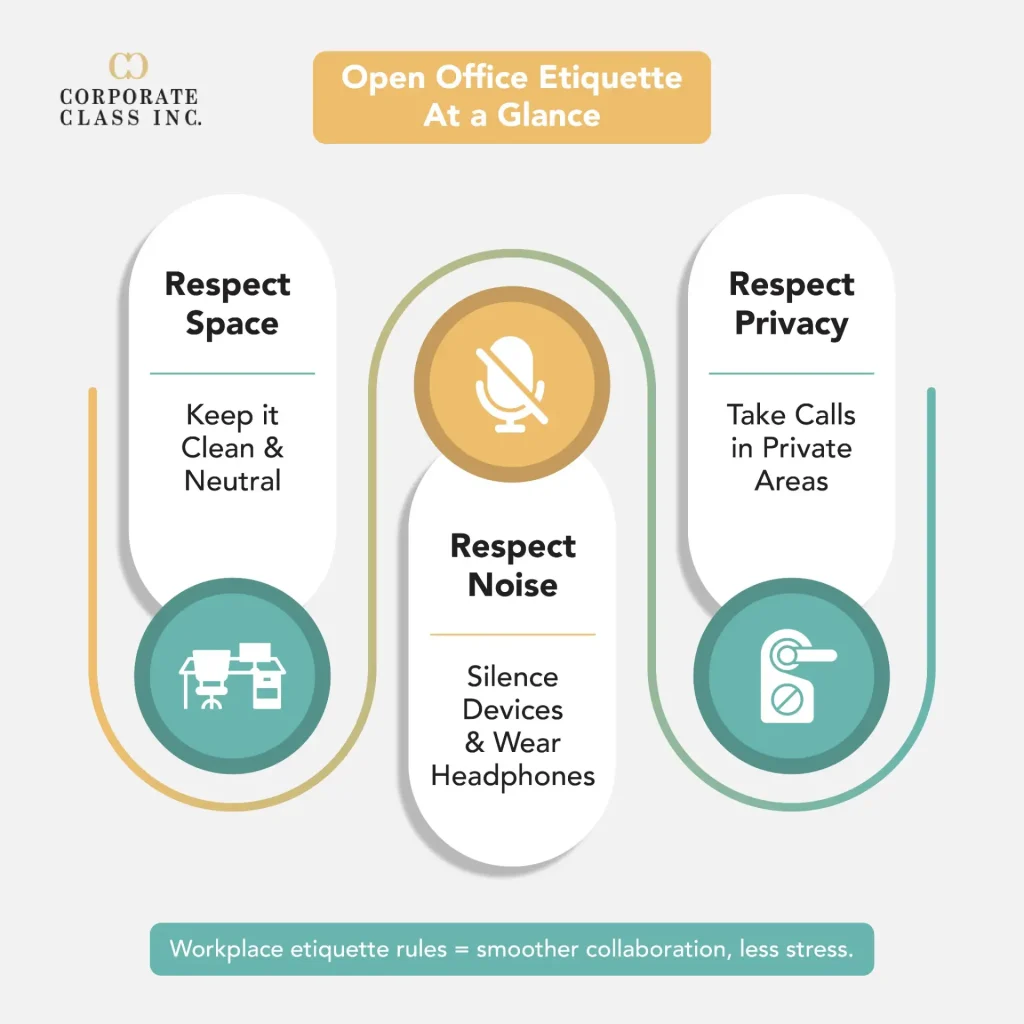
open office etiquette

DOs and DON’Ts of Open Office Conduct

stressful for everyone. These practical habits can make or break the shared experience for your team. When adopted consistently, they support mutual respect, limit distractions, and keep productivity on track. More importantly, they reinforce foundational workplace etiquette rules that help your environment run smoothly.

DOs

  • Use headphones when listening to music: Open spaces amplify sound. Headphones let you enjoy your favourite work playlist without impacting others’ ability to concentrate.
  • Keep your voice low during calls or conversations: Even casual work discussions can travel. Try to speak in a soft tone, especially when the room is quiet.
  • Respect shared space by cleaning up after yourself: Treat kitchens, lounges, and meeting rooms like public property. A quick wipe or returning supplies to their place shows care for your colleagues.
  • Take confidential conversations to private rooms: Always look for enclosed areas when discussing sensitive topics. This safeguards both company information and personal boundaries.
  • Acknowledge quiet signals like “do not disturb” signs: If a coworker signals that they’re focusing, respect it. Don’t assume it’s personal, just give them the time they need.

DON’Ts

  • Use speakerphone for calls: This is one of the most disruptive behaviours in any open space. Use headsets or move to a meeting room.
  • Bring loud or smelly lunches to your desk: Foods that crunch, crackle, or carry strong smells linger long after lunch. Use the break room instead.
  • Interrupt colleagues without checking first: Even in open spaces, people may be deep in work. Ask if it’s a good time before jumping in.
  • Decorate your desk excessively in a shared area: Bold decorations can be visually overwhelming. Keep it minimal, especially when desks are visible from multiple angles.
  • Leave confidential documents in the open: Always store private documents in drawers or folders when not in use. Visibility matters in a shared environment.

By following these workplace etiquette rules consistently, you’ll not only support a professional atmosphere, but also make open office life more manageable for everyone.

…

Adaptation Tips for Hybrid or Remote Workers

Workplace etiquette rules apply even when you’re working remotely. While home offices feel more casual, maintaining a standard of professionalism is still critical. These behaviours reflect your reliability, communication style, and respect for team dynamics, even when you’re not in the same room.

Hybrid and virtual settings bring their own challenges. It’s easier to unintentionally break etiquette norms when face-to-face feedback isn’t immediate. That’s why reinforcing digital versions of workplace etiquette rules, like punctuality, clarity, and presence, matters just as much as it does in physical offices.

Be camera-ready

Appearances count, even through a screen. Dress appropriately for virtual meetings and ensure your background is tidy. A polished look conveys attention to detail and signals that you’re present and prepared.

Mute yourself

In virtual calls, noise etiquette is critical. Always keep yourself muted unless speaking. Background noise is distracting and signals a lack of courtesy for others’ listening experience. If you’re joining from a busy environment, inform the group at the start.

Be punctual

Remote work requires more self-management than in-person environments. Log in a few minutes early, check your tech setup, and avoid joining late. When you respect others’ time, you reinforce trust and keep things moving.

Communicate proactively

Visibility drops in remote environments, so it’s your job to make your status clear. Use away messages, Slack updates, or calendar sharing to show availability. Prompt replies and scheduled check-ins reduce confusion and foster connection across locations.

These simple adjustments help hybrid and remote professionals align with core workplace etiquette rules, no matter where they’re working from.

Wrapping Up Workplace Etiquette Rules for Open Offices

Adapting to shared workspaces isn’t about sacrificing individuality; it’s about showing awareness. These workplace etiquette rules are simple in theory, but their real power lies in consistent practice. When everyone follows the same respectful standards, collaboration becomes easier, productivity rises, and office life improves.

Start applying these etiquette rules in the workplace, whether you’re in-person or remote, and you’ll build trust, comfort, and credibility every day.

Learn how to communicate effectively without disrupting your team.

Master the science of communication using your natural strengths.
Discover Your Fascination Advantage
etiquette in the workplace office etiquette open office etiquette positive workplace culture workplace etiquette

Workplace Etiquette Tips for Managers and Employees Every Professional Should Know

Workplace Etiquette Tips for Managers and Employees Every Professional Should Know

Workplace etiquette tips are often underestimated, yet they carry significant influence on your career progression. Doing your job well may be enough to meet your job description, but it rarely secures growth opportunities. The way you interact with colleagues, demonstrate respect, and manage business etiquette in business communication directly impacts how others perceive your professionalism. For many professionals, this perception is the factor that determines whether they move forward or remain overlooked.

When you understand what workplace etiquette is and how it shapes daily interactions, you can strengthen your executive presence, build stronger networks, and position yourself for advancement. Whether you are a new graduate or a senior leader, following etiquette in the workplace demonstrates credibility and respect.

Key Takeaways

  • Workplace etiquette tips shape professional reputation and directly influence career growth.
  • Strong etiquette in communication, collaboration, and conflict management strengthens trust and team culture.
  • Canadian workplace etiquette values respect, inclusion, and professionalism, setting a standard for global employees.

Why Workplace Etiquette Matters in Professional Growth

Workplace etiquette means more than following a checklist of polite behaviours. It reflects how you value others and how you conduct yourself in situations that test your patience, collaboration skills, and integrity. Leaders across industries recognize that strong etiquette is tied to business performance, as it creates trust, credibility, and smoother workplace interactions.

Research on Canadian workplace etiquette consistently shows that professionals who practice courtesy and respect enjoy stronger team collaboration and higher rates of promotion. It’s no surprise that organizations invest in executive presence and leadership coaching to develop these skills among their managers and employees.

Core Workplace Etiquette Tips Every Professional Should Practice

6 Workplace Etiquette Tips Every Professional Should Know-01

The foundation of good etiquette comes down to daily habits. These are simple yet powerful actions that reflect how much you value the people you work with. Below are workplace etiquette tips that strengthen relationships and build respect across all levels.

  • Respect all roles: Success depends on collaboration. Recognize that no role is small and treat everyone with equal respect.
  • Do your share: Refill supplies, tidy shared spaces, and take initiative when something is needed. Small acts show responsibility.
  • Manage conflict wisely: Approach disagreements calmly and directly. Listen first, avoid blame, and own your mistakes when necessary.
  • Keep work issues private: Avoid discussing sensitive matters outside the office. Protecting confidentiality builds trust in the organization.
  • Stay away from gossip: Protect sensitive information and resist spreading rumours. Professional reputations are shaped by discretion.
  • Encourage team input: Regular meetings where everyone contributes create a sense of inclusion and accountability.

Canadian Workplace Etiquette: What Professionals Need to Know

Canadian workplace etiquette reflects values of respect, inclusivity, and cultural awareness. Professionals are expected to listen actively, communicate clearly, and show consideration for colleagues regardless of hierarchy. Punctuality, responsiveness, and acknowledgment of others’ contributions also play a significant role in business etiquette in Canada.

Understanding these expectations allows both local and international employees to adapt quickly to workplace culture. For global professionals entering the Canadian job market, recognizing these etiquette norms can help them build trust and credibility faster.

Business Etiquette in Business Communication

Strong business communication is one of the most visible expressions of etiquette at work. Tone, clarity, and timing influence how messages are received and how colleagues view your professionalism. Written communication, such as emails, reports, and proposals, should be clear, respectful, and free of unnecessary jargon. Verbal communication should demonstrate attentiveness and patience, especially in meetings or client interactions.

Good communication etiquette helps prevent misunderstandings, speeds up decision-making, and strengthens workplace relationships. When communication breaks down, productivity and trust often follow.

Improve workplace communication with proven etiquette strategies. Equip your leaders and employees with tools for clear, professional interaction.
Learn More

Business Etiquette and Its Role in Team Collaboration

Business etiquette is often dismissed as surface-level manners, yet it goes deeper. It defines how teams interact, how decisions are made, and how conflicts are resolved. When leaders model strong etiquette, they establish a standard of accountability and fairness that others follow.

Teams that follow etiquette consistently demonstrate higher trust and reduced workplace tension. This creates smoother project execution, stronger client service, and a healthier workplace culture overall.

Strengthen team culture with etiquette workshops. Help your employees develop practical etiquette skills that improve workplace harmony.
Book a Workshop

The Unspoken Rules of Workplace Etiquette Tips

Beyond the obvious expectations, every workplace has unspoken rules that guide daily interactions. These rules may include how meetings start, how recognition is given, or how disagreements are addressed. Professionals who quickly learn these rules often gain faster acceptance and build stronger credibility.

Our etiquette programs help participants identify and practice these unspoken rules, so they align with their company culture while strengthening their professional image.

FAQ

What is workplace etiquette and why is it important?

Workplace etiquette refers to the set of expected behaviours and standards that guide professional interactions. It ensures respect, accountability, and courtesy across all levels of an organization. When professionals follow workplace etiquette, they create an environment where collaboration and communication thrive. This not only improves workplace culture but also builds credibility and career opportunities.

How does Canadian workplace etiquette differ from other cultures?

Canadian workplace etiquette places strong emphasis on inclusivity, politeness, and respect for diversity. Unlike some cultures that prioritize hierarchy, Canadian workplaces expect employees to value contributions at all levels. Professionals are also encouraged to communicate openly while maintaining courtesy and professionalism. This combination creates an environment where collaboration feels natural and accessible.

How does business etiquette in business communication impact success?

Business etiquette in business communication shapes how messages are received and understood. Clear, respectful communication prevents misunderstandings, speeds up decisions, and strengthens relationships with colleagues and clients. Poor communication, on the other hand, can damage credibility and slow down progress on projects. Practicing etiquette in written and verbal exchanges demonstrates professionalism and reliability.

Applying Workplace Etiquette Tips for Career Growth

Applying workplace etiquette tips consistently demonstrates that professionalism is more than technical skill, it is how you carry yourself every day. From respecting confidentiality to improving communication, these habits define how others view your potential. For managers and employees alike, etiquette shapes credibility and long-term influence. By adopting these practices, you create an environment where respect, accountability, and leadership naturally thrive.

Align your team with workplace etiquette training. Learn the unspoken rules that drive engagement and professional growth.
Start Your Journey
employee etiquette training etiquette tips etiquette training Executive Presence manager etiquette training office etiquette proper office etiquette workplace etiquette
Corporate Class Inc Footer Logo

For Businesses

  • Workshops
  • Lunch & Learns
  • Private Coaching
  • Consulting
  • Certification & Licensing

For Individuals

  • Workshops
  • Private Coaching
  • Trainer Certification

Our Approach

Resources

About Us

FAQs

Privacy Policy

Contact Us

  • 416-967-1221

© Copyright 2026 Corporate Class Inc. All Rights Reserved.